Finding water around your indoor AC equipment can be confusing because an air conditioner normally produces moisture while it cools your home. The important question is whether that water is following its intended drainage path or ending up on the floor, ceiling, or inside the equipment cabinet. When you need AC repair in Palmdale due to a water problem, identifying the source of the moisture is an important first step.
At Origin Heating & Air, we look beyond the puddle itself, as several components can cause similar symptoms. A blocked drain, damaged pan, frozen coil, or drainage installation issue can each leave water where it does not belong, yet each calls for a different solution.
Why Your Air Conditioner Produces Water in the First Place
An air conditioner does more than lower indoor temperature. Warm household air passes across the cold evaporator coil, and moisture in that air condenses on the coil much like water forms on the outside of a cold glass.
That moisture should drip into a condensate pan and leave through a drain line. Under normal operation, you generally do not notice this process because the drainage system carries the water away as it forms.
So, seeing water does not mean your AC somehow developed a plumbing supply leak. The problem often starts when normal condensation cannot travel through its intended route.
Start by Finding Where the Water Appears
Location matters when investigating an air conditioner water leak. Water directly beneath an indoor air handler suggests a different set of possibilities from moisture appearing around a ceiling vent or dripping from a secondary drain outlet.
Before wiping everything away, take note of where the water first appeared and how much you found. Also pay attention to whether the AC was operating, whether airflow had recently weakened, and whether the leak returns after another cooling cycle.
These details help narrow the possibilities. A small amount of water after one unusual event and a puddle that reappears every afternoon do not necessarily point toward the same problem.
A Clogged Condensate Drain Can Send Water Backward
A clogged condensate drain is one possible reason water begins collecting around indoor cooling equipment. Because the drain line carries moisture away from the evaporator area, a blockage can cause water to back up instead.
Sludge, biological growth, dust, and debris can accumulate inside the drain pathway over time. Once water can no longer move through the line at the rate the system produces it, the drain pan begins filling faster than it empties.
Depending on the equipment setup, a safety switch may shut the AC off when the water level rises. If no switch is present, or if the drainage problem occurs elsewhere, water may overflow before the homeowner realizes anything is wrong.
The Drain Pan Has an Important Job
The drain pan sits beneath the evaporator coil to catch condensation. From there, the collected water enters the condensate drain rather than spilling into the equipment cabinet or surrounding area.
If you find the AC drain pan leaking, the problem may involve physical damage, corrosion, or deterioration rather than a blockage farther down the line. Older metal pans can corrode, while other pans may crack or become damaged.
A technician needs to determine whether water is overflowing from an intact pan or escaping through the pan itself. Those conditions may look similar from outside the equipment, but they require different repairs.
A Frozen Evaporator Coil Can Leave a Surprisingly Large Puddle
Not every AC water problem begins in the drainage system. A frozen evaporator coil can accumulate a layer of ice that eventually melts, producing more water than the drainage system can normally handle at once.
Several conditions can contribute to coil freezing, including insufficient airflow and certain refrigerant problems. If you notice weak airflow, visible ice, or declining cooling performance before water appears, the coil deserves attention.
Turning the thermostat lower will not solve a frozen coil. In fact, continuing to demand cooling while the underlying problem remains can allow more ice to form.
Dirty Filters Can Be Part of the Chain of Events
A clogged air filter does not usually pour water onto the floor on its own. Instead, it can restrict the amount of warm household air moving across the evaporator coil.
When airflow drops sufficiently, the coil temperature can drop below normal operating conditions, and ice may begin to form. Once the system stops or the ice thaws, that accumulated moisture has to go somewhere.
This is a good example of why the visible puddle is only the final symptom. The repair should focus on the condition that created the water rather than simply removing the moisture.
An AC Leaking Water May Actually Be a Drainage Installation Issue
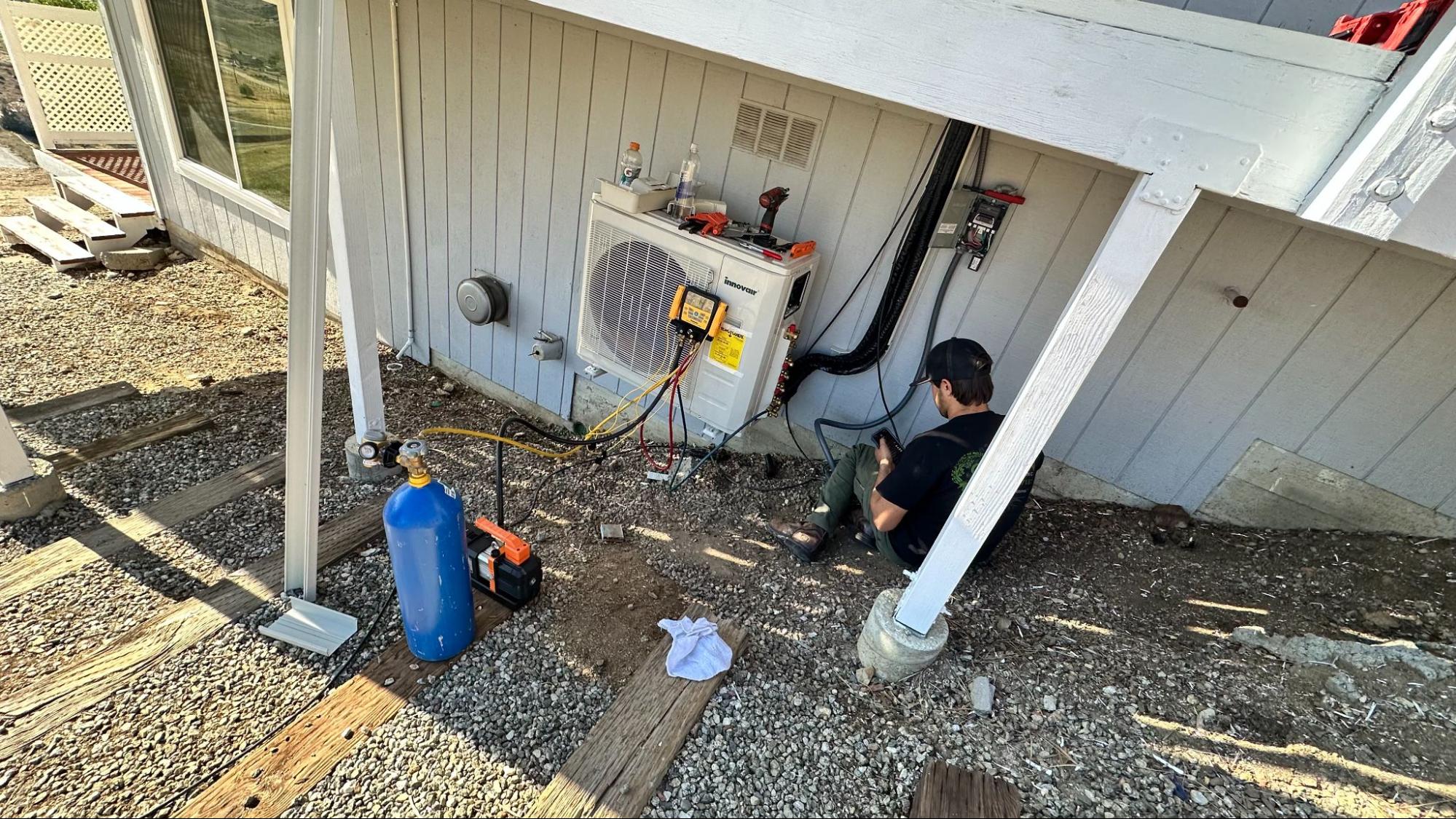
Condensate does not always leave the system with the help of a pump. Many installations rely on gravity, which means the drain piping needs a route that allows water to flow away from the equipment.
A drain line with an unsuitable slope can leave water sitting where it should continue moving. Installation details, such as traps and venting, also vary with equipment configuration and pressure conditions at the drain connection.
If an AC leaking water has experienced drainage trouble since installation or after recent equipment work, the drain arrangement itself may deserve inspection. A recurring problem should not automatically be treated as another random clog.
Condensate Pumps Add Another Possible Failure Point
Some HVAC systems cannot send condensate to an appropriate drain using gravity alone. These installations may use a condensate pump to collect water and move it to a discharge location.
If the pump loses power, its float mechanism sticks, or the pump fails mechanically, the reservoir may fill until water escapes. The cooling equipment can continue producing condensation even though the device responsible for removing it has stopped working.
Homeowners with a condensate pump should therefore include it among the possible causes when investigating water around the system. Replacing a drain pan or clearing a line would not solve a failed pump.
Why Water Near Ceiling Equipment Needs Quick Attention
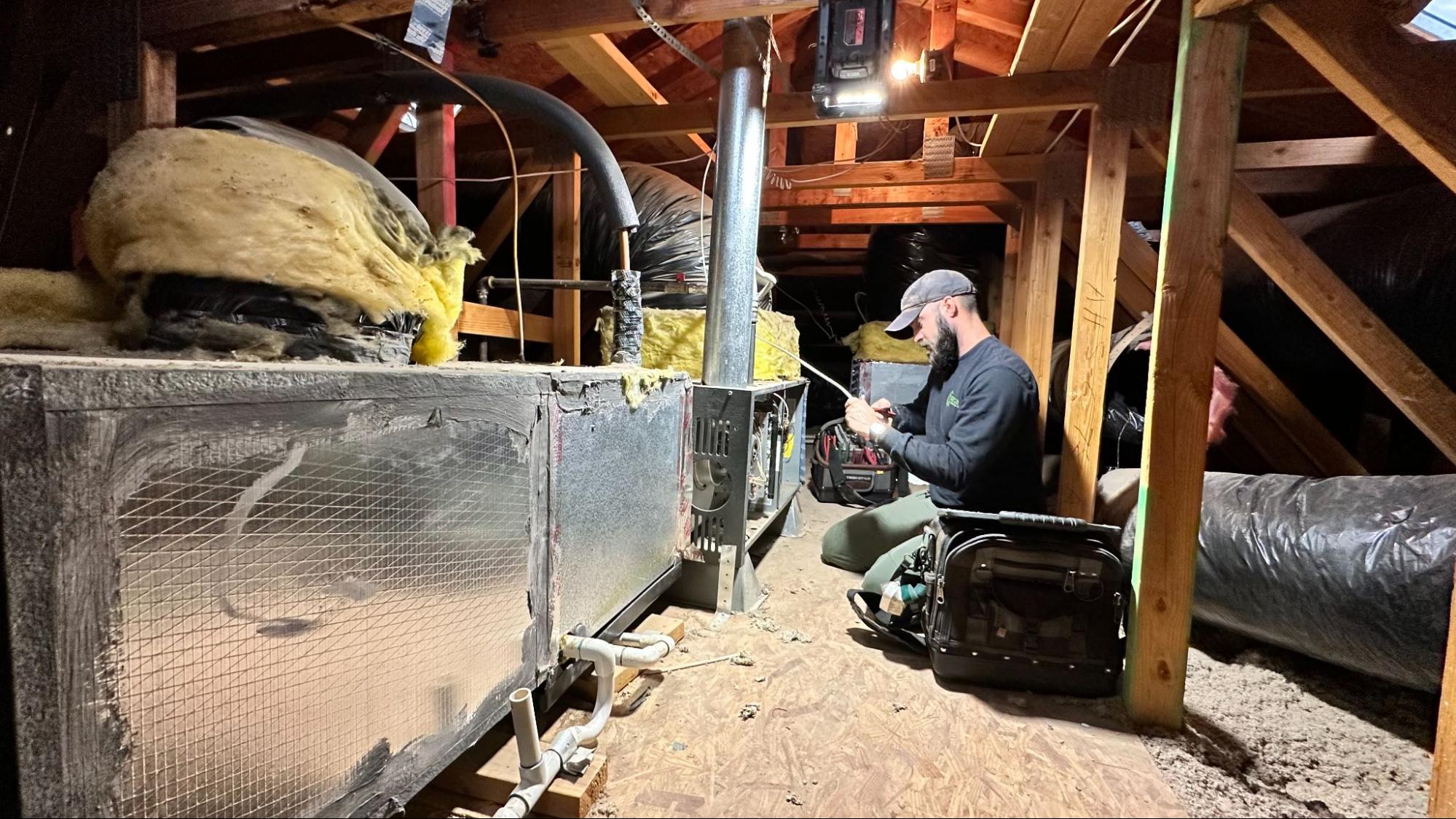
Some homes have HVAC equipment or drain lines located above finished ceilings. In those situations, a relatively small leak can affect drywall, insulation, paint, or other materials before water becomes obvious inside the living space.
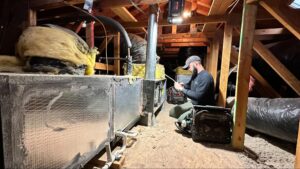
A secondary drain pan may sit beneath attic equipment to catch water that escapes the primary drainage system. Some installations also use a secondary drain outlet positioned where dripping water becomes visible, giving the homeowner a warning that the primary drainage route needs attention.
A ceiling stain, dripping secondary outlet, or wet area below attic equipment should not be treated as normal AC condensation. Finding the source early can limit damage outside the HVAC system.
Water Around the Outdoor Unit Can Be Completely Different
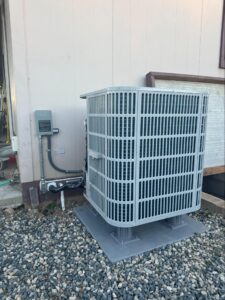
Not every wet spot near HVAC equipment indicates a failure. Outdoor units are exposed to irrigation, rain, and other moisture sources unrelated to the indoor condensate system.
Heat pumps can also produce water outdoors during certain operating conditions. That makes location and equipment type important before assuming every puddle requires an AC repair.
If the water appears around the indoor equipment during cooling operation, however, condensate drainage and coil conditions become much more relevant. Knowing which piece of equipment is wet helps avoid chasing the wrong explanation.
Never Assume Refrigerant Is the Liquid on the Floor
Homeowners sometimes worry that a puddle beneath the air conditioner must be liquid refrigerant. Residential AC refrigerant circulates within a closed system and does not normally form a water-like puddle beneath the indoor unit when a leak develops.
However, a refrigerant problem can indirectly contribute to water on the floor if it causes the evaporator coil to freeze. The visible liquid is water from melting ice, not refrigerant draining out of the equipment.
That distinction matters because adding refrigerant does not automatically solve a frozen coil. The system needs an evaluation to determine why operating conditions allowed the coil to freeze.
Get the Cause of the Leak Identified
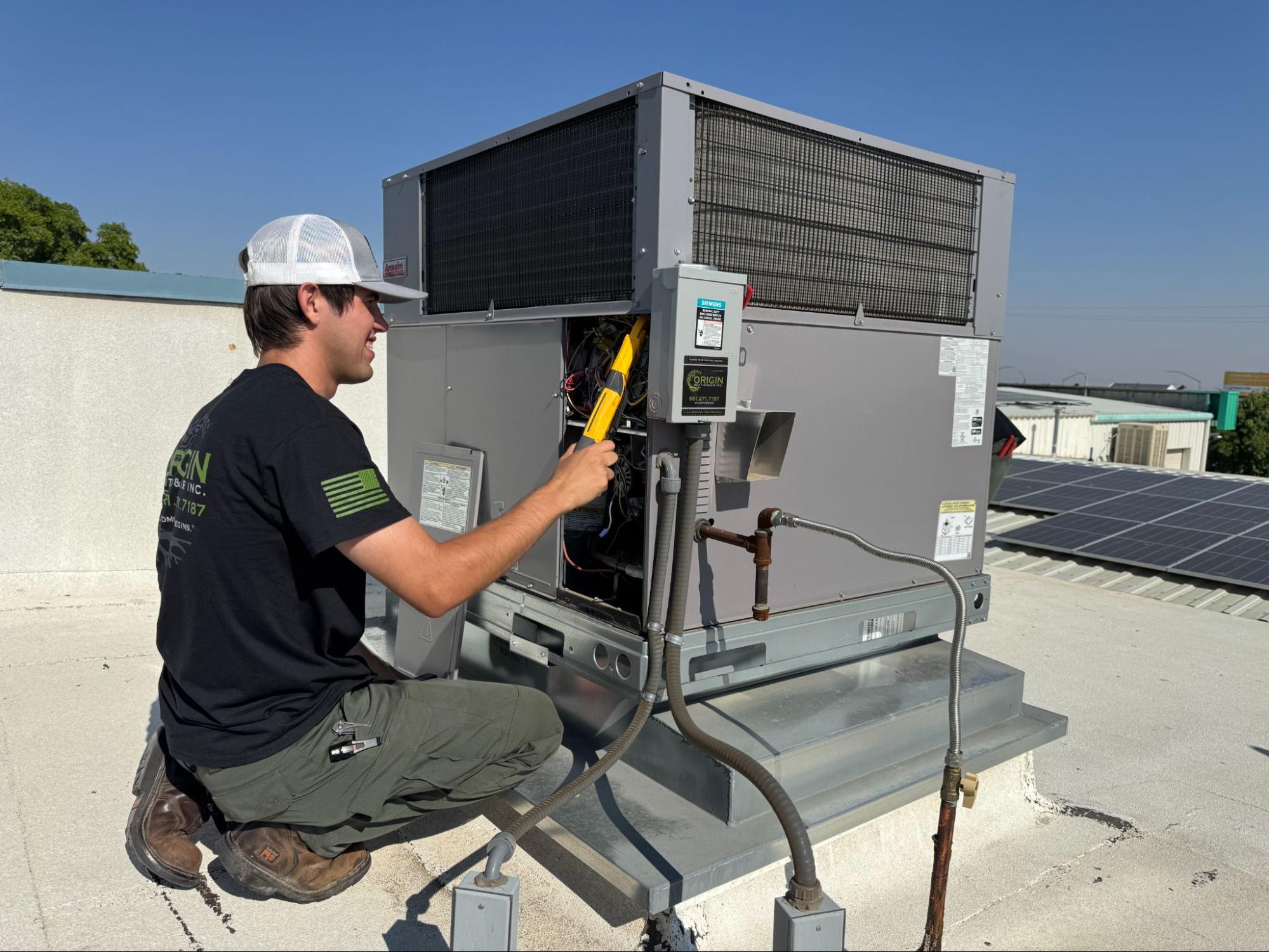
Water around cooling equipment can stem from a blocked condensate line, a damaged drain pan, a frozen evaporator coil, a failed condensate pump, or another drainage concern. Since those problems require different solutions, identifying the source is more useful than repeatedly drying the same puddle.
Origin Heating & Air can inspect leaking cooling equipment and trace the source of the unwanted moisture. We serve Palmdale homeowners who need help determining why an AC is producing water in the wrong place and what repair is appropriate for the specific cause.
Contact our HVAC contractors today to schedule an AC evaluation if water keeps appearing around your cooling system.
Frequently Asked Questions
Can AC condensate water be reused for plants?
Condensate does not contain the same minerals as typical tap water, but it may pick up contaminants from coils, pans, or drain lines. Because water quality varies by system, homeowners should research the needs of specific plants before deciding how to reuse collected condensate.
Can an AC water leak cause mold inside a wall?
Persistent moisture within a wall or ceiling can create conditions conducive to microbial growth, particularly when building materials remain wet. If an HVAC leak has affected concealed materials, drying the visible surface alone may not reveal the full extent of the moisture.
Will homeowners insurance pay for damage from an AC leak?
Coverage depends on the policy and the circumstances surrounding the damage. Insurers may distinguish between sudden water damage and problems caused by long-term leakage or neglected maintenance, so homeowners should review their individual policy or contact their insurer.
One AC Warning Can Happen at the Breaker Panel
Continue with “Why a Tripped Breaker Can Be a Warning Sign That AC Repair in Palmdale Is Needed“ to learn why air conditioners trip breakers, which components may be involved, and why repeatedly resetting the breaker can hide a problem instead of solving it.