Ice on an air conditioner during a hot Lancaster afternoon looks completely backward. After all, the system is supposed to cool your house, so how can part of it actually freeze? When this happens, AC repair in Lancaster may be necessary because ice usually means conditions around the indoor evaporator coil have become cold enough for moisture to freeze instead of draining away normally. Origin Heating & Air evaluates the cause rather than treating the ice as the problem.
A frozen system can begin with something as straightforward as restricted airflow, but blower problems and abnormal refrigerant conditions can produce similar symptoms. That makes diagnosis important. Melting the ice removes what you can see, but it doesn’t necessarily fix what caused the coil to freeze in the first place.
Why an AC Unit Can Freeze Up During Hot Weather
The evaporator coil inside an air conditioner normally operates at a temperature low enough to remove heat and moisture from household air. Warm return air passes across the coil, refrigerant absorbs heat, and moisture condenses on the coil before draining away as liquid water.
Trouble begins when the coil surface falls below freezing and stays there. Instead of remaining liquid, moisture on the coil turns to ice. Additional moisture can then freeze onto that first layer, allowing the buildup to spread.
That is why an AC unit freezing up does not mean the equipment is simply producing too much cold air. Something has changed the relationship between airflow, refrigerant conditions, heat transfer, and coil temperature.
A Frozen Evaporator Coil Can Start With Restricted Airflow
The evaporator needs a steady supply of relatively warm indoor air moving across it. That airflow provides the heat the refrigerant should absorb.
When airflow drops significantly, less heat reaches the coil even though the refrigeration cycle continues. The coil temperature can drop enough for accumulated moisture to freeze.
Several conditions can reduce airflow:
- A heavily loaded air filter
- A dirty evaporator coil
- Blocked or restricted return airflow
- Closed or obstructed registers
- Duct restrictions
- Incorrect blower operation
- A blower motor or control problem
Finding a dirty filter does not automatically prove it caused the freeze. However, airflow is an important part of diagnosing a frozen evaporator coil because the air side and refrigeration side of the system affect each other.
The Air Filter Is Worth Checking First
The air filter is one of the few components homeowners can easily inspect without opening HVAC equipment. When a filter becomes heavily loaded with dust and debris, airflow resistance increases.
Replacing a dirty filter may remove one restriction, but a system that has already developed substantial ice still needs time to thaw. Immediately demanding another cooling cycle can leave the underlying frozen coil in place.
Also, do not assume every frozen AC has a dirty filter. A clean filter simply removes one possible cause from the list. If freezing returns, another airflow or refrigeration problem may still be present.
Blower Problems Can Reduce Airflow Across the Evaporator
Even with a clean filter and open registers, the evaporator may not receive enough airflow if the indoor blower isn’t moving the expected amount of air. The blower motor, wheel, controls, and speed settings all affect airflow.
A motor can fail, but some problems are less obvious. It may run intermittently, run at the wrong speed, overheat, or struggle because of an electrical or mechanical issue.
A Dirty Blower Wheel Can Move Less Air
Dust accumulation on blower wheel blades changes their shape and reduces their ability to move air efficiently. The motor may still run, which can make the problem less obvious from outside the equipment. Checking the wheel’s condition helps determine whether the blower assembly is actually moving the air the system needs.
Motor and Control Problems Can Interrupt Airflow
Depending on the equipment, capacitors, motor electronics, relays, control boards, or wiring can influence blower operation. A problem in any of these areas may cause the blower to stop, start inconsistently, or operate differently than intended.
Testing helps separate an airflow problem caused by the motor from one caused by the components controlling it.
Blower Settings Need to Match the Cooling System
A functioning blower can still move an unsuitable amount of air if its configuration does not match the cooling equipment. Variable speed and multispeed blowers may require specific setup based on the installed system. That is why diagnosis should consider actual airflow rather than simply confirming that the blower spins.
Ice on an AC Refrigerant Line Can Be a Clue
Homeowners sometimes notice ice on an AC refrigerant line before realizing the evaporator coil is frozen. Ice may appear on the larger insulated line near the indoor equipment or even become visible outside near the condenser.
Visible ice doesn’t necessarily mean the line itself caused the problem. The refrigerant line is connected to the same refrigeration circuit as the evaporator, so abnormal conditions at the coil can show up farther along the system.
If you see ice outside, there may be much more frozen surface area inside the indoor cabinet. Turning the thermostat lower won’t fix it and can allow more ice to build up.
Low Refrigerant Can Contribute to Evaporator Freezing
Low refrigerant charge can create operating conditions that allow evaporator temperature to fall below freezing. However, describing this as an air conditioner simply “needing refrigerant” leaves out an important part of the diagnosis.
Residential air conditioning systems circulate refrigerant through a closed circuit. Refrigerant is not routinely consumed like fuel. If the system contains less refrigerant than intended, technicians need to consider why.
A leak may develop at a coil, fitting, joint, valve, or another point in the refrigerant circuit. Adding refrigerant without addressing the cause may temporarily restore operating conditions while leaving the underlying leak unresolved.
Refrigerant Restrictions Can Also Change Coil Conditions
Low charge is not the only refrigeration issue that can affect evaporator conditions. A restriction in the refrigerant circuit can alter pressure and refrigerant flow through parts of the system.
Metering devices regulate how refrigerant enters the evaporator. Depending on system design, a restriction involving the metering device, filter drier, or another portion of the circuit can create abnormal temperature and pressure conditions.
This is one reason ice alone cannot identify the failed component. You need to consider pressure, temperature, airflow, and equipment-specific information together.
Why Ice Makes the Airflow Problem Worse
Once ice begins coating the evaporator, the problem can feed itself. Air needs to pass through the coil, but a growing layer of ice blocks the spaces where that air normally travels.
As the blockage grows, homeowners may notice:
- Less air coming from supply registers
- Longer cooling cycles
- Indoor temperatures rising despite AC operation
- Ice becoming visible on refrigerant piping
- Water appearing after the ice begins to melt
- The system running without delivering its usual cooling
At that point, lowering the thermostat further can make matters worse. The system needs the cause of the freeze addressed, not a stronger request for cooling.
Turn Cooling Off Before Trying to Thaw a Frozen AC
If you can clearly see ice on the system, continuing to operate the compressor is not useful. Turning off cooling mode stops the refrigeration process while the ice thaws.
Depending on the thermostat and system condition, running the indoor fan without cooling may help move room temperature air across the frozen coil. However, homeowners should watch for water, as a large amount of melting ice can produce more moisture than they expect.
Do not chip, scrape, or pry ice away from the evaporator. Coil fins and refrigerant tubing can be damaged, turning a diagnostic problem into physical equipment damage.
Frozen AC Repair in Lancaster, CA, Should Happen After the Ice Melts
A heavily iced evaporator can make diagnosis harder because technicians need access to the coil and proper operating conditions. Frozen AC repair in Lancaster, CA, may therefore start with letting the system thaw before completing certain tests.
Once the ice is gone, the technician can evaluate airflow and refrigeration conditions without the frozen coil itself distorting those measurements. That distinction matters because ice becomes an additional restriction after the original problem starts.
Testing may include checking:
- Filter and evaporator coil condition
- Blower operation and configuration
- Airflow or static pressure where appropriate
- Refrigerant pressures and temperatures
- Refrigerant charge using the applicable procedure
- Signs of a refrigerant leak
- Metering device operation when symptoms point in that direction
The goal is to identify the condition that allowed freezing to begin rather than stopping the diagnosis at “the coil had ice on it.”
Lancaster’s Heat Does Not Prevent an Indoor Coil From Freezing
It may seem strange that an evaporator can freeze when outdoor temperatures are high, but outdoor weather does not directly determine the evaporator surface temperature. Refrigerant pressure, refrigerant flow, indoor airflow, and the amount of heat reaching the coil all play major roles.
Lancaster heat can actually make the situation more noticeable because homeowners rely heavily on cooling during hot periods. Longer operating times give an existing airflow or refrigeration problem more opportunity to produce visible symptoms.
Still, weather shouldn’t be the diagnosis. A functioning system should operate within the conditions it was designed for without routinely developing ice.
Get a Frozen Air Conditioner Checked Before Restarting the Cycle
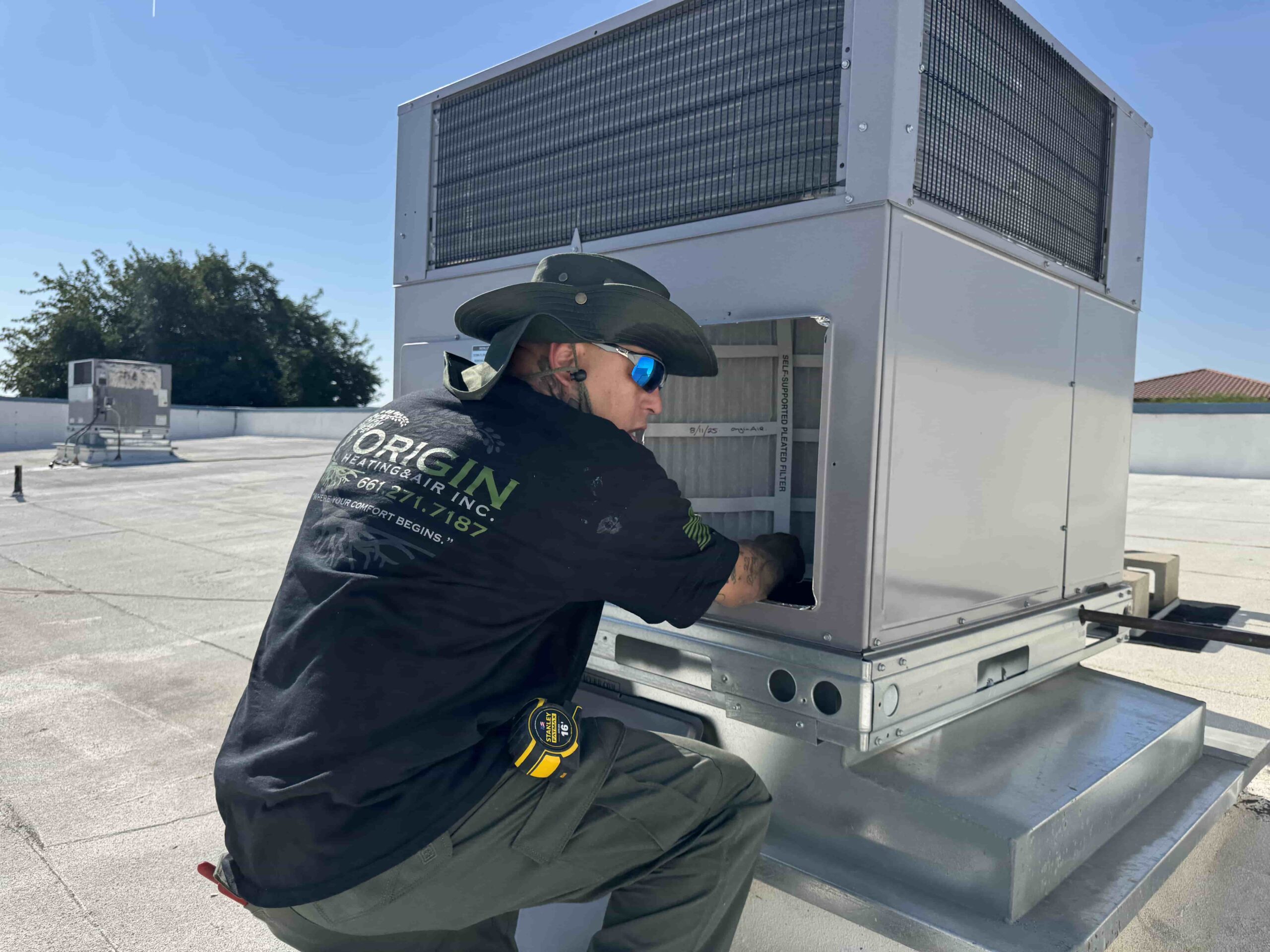
Ice is your air conditioner’s way of showing that normal heat transfer has been disrupted. Restricted airflow, blower trouble, an abnormal refrigerant charge, or refrigerant circuit problems can all create conditions that allow the evaporator to freeze, and simply waiting for the ice to disappear doesn’t tell you which one occurred.
Origin Heating & Air provides AC diagnostics and repair for Lancaster homes dealing with frozen cooling equipment. We can evaluate airflow and refrigeration conditions, determine what is contributing to the freeze, and explain the repair options based on what the system is actually doing.
Contact our HVAC contractors when your AC develops ice so you can address the cause before putting the system through another cooling cycle.
Frequently Asked Questions
Can running an air conditioner when the outdoor temperature is unusually cool cause freezing?
It can on some systems. Standard residential cooling equipment is designed to operate within specified outdoor temperature ranges, and operating below those conditions can affect refrigerant pressures. Some applications use low-ambient controls when cooling is required in cooler outdoor weather.
Can a dirty evaporator coil be cleaned instead of replaced?
Often, yes, if contamination is the problem and the coil remains serviceable. The cleaning method depends on accessibility, coil condition, and the type of buildup present. Physical damage, severe corrosion, or refrigerant leaks are separate issues that cleaning cannot correct.
Can high indoor humidity make AC ice buildup worse?
Humidity supplies more moisture that can condense on a cold evaporator coil. However, high humidity alone usually doesn’t explain why the coil dropped below freezing. If freezing conditions already exist, additional moisture can contribute to more noticeable ice accumulation.
Next Up: Before Choosing the Size of Your New AC
Continue with “What a Load Calculation Tells You Before Air Conditioning Installation in Lancaster” to learn how characteristics such as insulation, windows, orientation, air leakage, and the home’s design help determine its actual cooling load.