Your thermostat says 74 degrees, yet the living room feels warmer, the bedroom feels stuffy, and the sunny side of the house seems determined to ignore that number altogether. When something feels off with HVAC systems in Tehachapi, the thermostat setting is only one piece of the comfort puzzle. Origin Heating & Air helps homeowners look beyond that number to understand what is actually happening throughout the house.
A thermostat measures temperature at one specific location. It does not directly measure the temperature of your windows, walls, floors, or every other room, and it cannot tell how comfortable those surfaces make you feel. That distinction explains why a system can technically reach its target while the house still feels warmer or cooler than expected.
Your Thermostat Only Knows What Is Happening Around It
Think of a thermostat as a temperature reporter assigned to one small section of your home. It senses conditions around itself and tells the HVAC system when to start or stop based on that information.
That arrangement works well when the thermostat sits in a representative location. However, problems develop when its surroundings are noticeably warmer or cooler than the areas where you spend your time. Locating thermostats on interior walls, away from direct sunlight, appliances, and drafts, is ideal because these factors can distort the control’s readings.
For example, imagine afternoon sunlight heats the wall around your thermostat while the rest of the house remains relatively comfortable. The thermostat may call for additional cooling because it thinks the entire house needs it. Reverse the situation with a nearby supply register blowing cold air toward the thermostat, and the system may shut down while distant rooms still need cooling.
Thermostat Placement Problems Can Create Misleading Readings
Some thermostat installation problems are easy to spot once you know what to look for. A thermostat near an exterior door may experience drafts, while one across from a west-facing window can receive substantial afternoon heat.
Heat-producing appliances create another issue. Televisions, lamps, kitchen appliances, and electronics can warm the immediate area enough to influence a nearby thermostat. Even locating the control near a supply register can cause trouble because freshly conditioned air reaches the sensor before it reaches the rest of the house.
Direct sunlight, supply air, and abnormal radiant surface temperatures are factors to consider when assessing thermostat location. If you consistently find the thermostat reading wrong compared with another reliable thermometer, location should be one of the factors investigated rather than immediately assuming the HVAC equipment has failed.
A Correct Temperature Can Still Feel Uncomfortable
Here is where home comfort gets interesting. Air temperature is important, but your body also exchanges heat with the surfaces surrounding it.
Radiant heat can make a room feel warmer even when the thermostat says the air has reached your preferred temperature. A sunlit window can make occupants feel warmer than the measured air temperature would suggest. That effect can become especially noticeable in a room receiving substantial afternoon sun.
So, if you are sitting beside a hot window or exterior wall, lowering the thermostat another degree may treat the symptom without explaining the cause. The AC might be producing the requested air temperature, while solar heat entering through the building envelope continues to affect how the room feels.
Windows Can Create Their Own Comfort Zones
Tehachapi receives plenty of intense sunshine, which makes window location worth considering when investigating indoor comfort problems. A large glass area exposed to direct afternoon sun can gain substantially more heat than a shaded room on another side of the house.
Glass characteristics matter as well. Windows transfer solar heat into rooms, while high-performance glazing and low-emissivity coatings can reduce that heat transfer. Two rooms maintained at the same air temperature may therefore feel different if one has greater solar exposure.
Window coverings can help manage that load, but the larger point is that the thermostat cannot see these differences. It simply reports the temperature at its location while individual rooms experience their own combination of sunlight, surfaces, and heat gain.
Airflow Determines Where Conditioned Air Actually Goes
Even an accurate thermostat cannot compensate for conditioned air that fails to reach the rooms that need it. Your HVAC system relies on supply ducts to deliver air and return pathways to bring air back for another heating or cooling cycle.
Dirty filters and coils can increase resistance and reduce airflow, while duct leakage can send conditioned air into spaces where it doesn’t benefit anyone. Dirty filters, dirty coils, duct leakage, and poor system balancing can reduce airflow or prevent heating and cooling from reaching intended rooms.
That creates an HVAC temperature imbalance, where the thermostat’s immediate area reaches the set point before other parts of the house do. Rather than automatically changing the thermostat, it makes more sense to determine why conditioned air is not being distributed evenly.
Your Return Air Path Matters Too
Supply vents get plenty of attention because you can feel conditioned air coming through them. Return air receives less attention, yet it plays an equally important role in circulation.
Blocking a return grille with furniture or restricting the pathway back to the equipment can change how air moves through the house. Similarly, closing interior doors may affect circulation in homes where rooms lack adequate return pathways.
Before assuming a temperature difference requires major equipment work, check the basics. Supply and return grilles should remain unobstructed, filters should be changed according to their requirements, and interior arrangements should allow air to circulate as the system was designed to move it.
Insulation Changes How Quickly Rooms Gain Heat
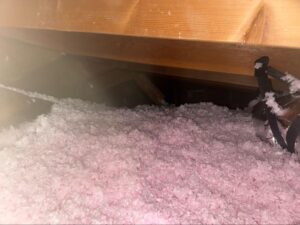
The thermostat can tell the air conditioner when to operate, but it cannot stop heat from moving through a poorly insulated ceiling or wall. Insulation slows heat flow through the home’s thermal boundary, helping indoor spaces resist changes in outdoor temperature.
Conduction, convection, and radiation are the three basic forms of heat transfer. Insulation reduces conductive and convective heat flow, while a strong thermal boundary helps reduce energy waste and improve comfort.
That means two rooms receiving similar amounts of conditioned air can still behave differently. If one sits below a hot attic with inadequate insulation, it may gain heat faster after each cooling cycle and feel uncomfortable sooner.
Air Leaks Can Make the Thermostat Seem Like the Problem
Air leakage creates another disconnect between thermostat temperature and actual comfort. Small openings around doors, windows, plumbing penetrations, recessed lights, and other parts of the building envelope allow outdoor air to enter while conditioned air escapes.
Those leaks can create localized drafts or warmer areas without dramatically changing the temperature at the thermostat. Sealing air leaks can improve comfort. It is estimated that reducing drafts may yield energy savings of 5 percent to 30 percent per year, depending on the home.
On a windy day, the difference may become easier to notice. One room can feel drafty or warm while the central thermostat remains satisfied because the air around the control has barely changed.
Internal Heat Sources Can Change One Room Faster Than Another
Not all unwanted heat comes from outside. Cooking, computers, televisions, lighting, and multiple occupants can add heat to individual spaces.
A home office with two computers and afternoon sun may warm faster than an unused guest room. Meanwhile, the thermostat in a central hallway may never experience the same heat load.
These differences matter when investigating comfort complaints because they reveal how each room is actually used. Examining occupancy and heat-producing equipment can explain why a temperature problem occurs at certain hours rather than remaining constant throughout the day.
When a Thermostat Temperature Not Matching Comfort Points to the HVAC System
Building characteristics account for many differences in comfort, but sometimes the HVAC system itself warrants attention. A thermostat may be accurately reporting temperature while declining system performance prevents the rest of the home from reaching similar conditions.
Weak airflow, duct leakage, blower issues, incorrect equipment operation, and system balancing problems can all contribute. The key is to avoid diagnosing the system based on the thermostat display alone, as several unrelated issues can produce a similar comfort complaint.
Timing provides useful clues. If the problem suddenly appears after years of consistent comfort, a mechanical or airflow change deserves investigation. If the same room has always been uncomfortable at the same time of day, window exposure, insulation, room location, or system design may be more relevant.
Compare Temperatures Before Changing Settings Again
A little observation can provide useful information before a service visit. Instead of repeatedly lowering the thermostat, compare conditions in different areas using a reliable indoor thermometer.
Take readings near the thermostat and in the room that feels uncomfortable at similar times of day. Also note sunlight exposure, which vents are operating, whether doors are open or closed, and how long the HVAC system has been running.
Patterns are more useful than a single reading. A bedroom that becomes warmer every afternoon suggests a different issue from an entire house that gradually loses cooling capacity throughout the day.
Seasonal HVAC Maintenance Can Reveal Changes Early
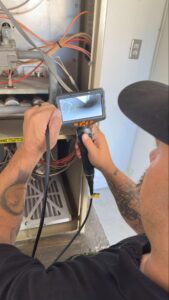
Routine seasonal HVAC maintenance provides an opportunity to catch airflow and equipment changes before they become major comfort complaints. Filter condition, coil cleanliness, blower operation, thermostat response, and temperature differences across the equipment all provide information about how the system is operating.
Maintenance cannot correct every building-related issue, such as insufficient insulation or excessive solar gain. However, it can help separate equipment concerns from the house’s characteristics, preventing homeowners from chasing the wrong solution.
That distinction matters. If the air conditioner is operating as expected but one west-facing room heats up quickly every afternoon, repeatedly adjusting HVAC settings will not address the underlying heat gain.
Get to the Source of the Comfort Difference
When the thermostat says one thing and your house seems to say another, you need more information than a number on the wall. Airflow, duct condition, thermostat location, windows, insulation, air leakage, and individual room heat loads can all influence how comfortable your home feels.
Origin Heating & Air can evaluate Tehachapi heating and cooling systems when temperature readings and actual comfort do not align. Contact us today to schedule an HVAC evaluation and find out what is contributing to the temperature difference in your home.
Frequently Asked Questions
Can a smart thermostat lose temperature accuracy over time?
Electronic thermostats can develop sensor or calibration issues, although an apparent error may also come from their surroundings. Comparing the thermostat with a reliable thermometer placed nearby can provide useful information before deciding that the control itself needs replacement.
Can adding a second thermostat fix an uncomfortable room?
A second thermostat only helps when the HVAC system is designed to use multiple zones or compatible controls. Adding another temperature sensor without changing how conditioned air is delivered will not automatically give an individual room independent temperature control.
Does the height of a thermostat affect its reading?
It can because warmer air tends to rise while cooler air settles lower in a room. Thermostat location should represent the occupied space rather than an unusually warm or cool pocket, so moving a control should account for both wall location and mounting height.
Your Next Comfort Clue Is Hiding Above the Ceiling
Continue with “How Better Insulation Can Reduce the Workload on HVAC Systems in Tehachapi“ to see how insulation affects heat gain, equipment runtime, energy use, and the amount of work your HVAC system has to perform.